
Uploading products on the GeM (Government e-Marketplace) portal is a mandatory step for sellers who want to participate in government procurement. While the process may look straightforward, many sellers face delays or rejections due to incorrect category selection, missing attributes, or non-compliant product details.
This guide explains how to upload products on the GeM portal step by step, in a simple and practical manner. It is designed for OEMs, manufacturers, and authorised sellers who want to understand the exact process followed on GeM before listing their products.
You’ll learn how product uploads work on GeM, what information is required at each stage, and how to avoid common mistakes that can lead to rejection or repeated corrections. By the end of this guide, you’ll have a clear understanding of the product upload workflow and what GeM expects from sellers during catalogue approval.
The Government e-Marketplace (GeM portal) is an online platform that facilitates procurement of goods and services by various Government departments and organizations in India. If you’re a seller looking to tap into this vast market, it’s crucial to understand how to add and upload products on GeM portal. In this blog post, we’ll walk you through the process step by step.
GeM Product Upload Process – Quick Overview
| Step | Stage | Description |
|---|---|---|
| 1 | Login to GeM Seller Account | Access your seller dashboard using your registered credentials. |
| 2 | Select the Correct Product Category | Choose the most accurate category and sub-category for your product. |
| 3 | Enter Product Details & Attributes | Fill in technical specifications, brand/OEM details, and mandatory attributes. |
| 4 | Upload Product Images & Documents | Add compliant images and supporting documents as per GeM guidelines. |
| 5 | Submit for Review & Approval | Submit the listing and track the approval status from the dashboard. |
Products vs. Catalogue on GeM Portal
The GeM portal is built on a catalogue-based system. While you upload individual products with their specifications, images, and prices, these listings together form your catalogue – your official storefront on GeM.
- Product → A single item/service you upload (e.g., a printer, laptop, or cleaning service).
- Catalogue → The complete collection of all your approved products, visible to government buyers.
👉 This means every product upload directly strengthens your catalogue, improving visibility in buyer searches and eligibility for tenders.
Step-by-Step Guide on How to Upload Products on Government e-Marketplace (GeM) Portal
Before you can start listing products on the GeM portal, you need to create an account. Here’s how:
Step 1: Register on GeM Portal
- Visit the Government e-Marketplace portal at https://gem.gov.in.
- Click on the “Register Now” button.
- Fill out the required information, including your business details, PAN, and GST details.
- Complete the GeM registration process by verifying your mobile number and email address.
Step 2: Login to Your GeM Seller Account
Once you’ve successfully registered, log in to your GeM seller account using your credentials.

Step 3: Complete the Business Information
Before you can add products on the GeM portal, ensure your business information is complete. This includes uploading necessary documents such as PAN, GSTIN, and more.
Step 4: Add Products to Your Catalog
Now, let’s get to the heart of the matter: adding your products to the GeM portal.
- On your seller dashboard, click on “Catalog” or a similar option depending on the portal’s design.
- Select “Add Product”.

Step 5: Fill in Product Details
For each product, you’ll need to provide detailed information. This includes:
- Product Category : Choose the appropriate category for your product.
- Product Subcategory : Further specify the product category.
- Brand Name : If applicable.
- Product Description : Write a clear and concise description of your product. Include keywords such as GeM product upload for better search visibility.
- Unit of Measurement : Specify how your product is measured (e.g., pieces, kilograms, liters).
- Price : Set the price for your product.
- Tax Information : Provide tax details.
- Technical Specifications : Include any technical specifications required for your product.

Step 6: Upload Product Images
High-quality images are essential for attracting buyers. Upload product images that clearly showcase your product’s features. Use images that:
- Are high resolution.
- Are taken from various angles.
- Align with your GeM catalog management strategy.
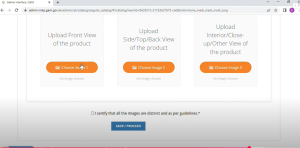
Step 7: Review and Submit
Double-check all the information you’ve entered. Ensure it’s accurate and complete. Once you’re satisfied, click “Submit.”
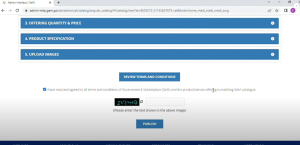
Step 8: Await Approval
Your product listing will be reviewed by GeM administrators. It may take some time for your products to be approved and appear on the portal.
Step 9: Managing Your Listings
After approval, you can manage your product listings, update information, and monitor sales through your GeM seller account.
Catalogue Management and Optimization
Uploading products is only the first step – maintaining a well-structured catalogue is what drives long-term success on GeM. An optimized catalogue ensures:
- Higher Visibility in Buyer Searches – Products with complete details, certifications, and images rank better within the portal.
- Faster Approvals – A consistent, accurate catalogue reduces rejection chances.
- Tender Readiness – Many tenders require sellers to have a verified and compliant catalogue.
Tips to Optimize Your Catalogue:
- Keep Information Updated – Regularly revise product prices, delivery timelines, and warranty details.
- Improve Product Descriptions – Use clear, keyword-rich descriptions that match buyer search terms.
- Use High-Quality Images – Ensure all images meet GeM’s compliance standards for faster approvals.
- Maintain Compliance – Update certifications (ISO, BIS, OEM, GST) as they expire or renew.
At Gemtech Paras, we not only help you upload products but also manage your entire catalogue end-to-end, ensuring it stays optimized, compliant, and attractive to buyers.
Common Reasons Why GeM Product Uploads Get Rejected
Many product uploads on the GeM portal are rejected during review, not because the product is ineligible, but due to data accuracy and compliance issues. Understanding these common rejection reasons can help sellers avoid repeated corrections and approval delays.
- Incorrect Product Category Selection
Selecting a broad or mismatched category is one of the most frequent reasons for rejection. GeM requires products to be listed under the most precise category and sub-category available.
- Missing or Incomplete Mandatory Attributes
Every category on GeM has mandatory attributes. If even one required field is missing, incorrectly filled, or marked as “Not Applicable” without justification, the product may be rejected.
- Non-Compliant Product Images
Images that do not meet GeM guidelines—such as poor resolution, watermarks, brand logos, or mismatched visuals—often lead to rejection. Product images must accurately represent the listed item.
- Mismatch Between Product Details and Documents
Inconsistencies between product specifications, brand details, and uploaded documents (such as catalogues or authorisation letters) can trigger rejection during verification.
- OEM or Brand Authorisation Issues
Products linked to an OEM or brand without proper authorisation, or with incomplete OEM information, are commonly rejected until the issue is resolved.
- Incorrect Technical Specifications
Entering approximate, assumed, or generic technical values instead of exact specifications can cause rejection, especially for regulated or technical product categories.
- Duplicate or Similar Product Listings
Uploading multiple products with near-identical attributes or descriptions can result in rejection for duplication, particularly when variations are not clearly defined.
- Non-Compliance with Category-Specific Rules
Some categories have additional approval requirements. Ignoring these category-specific conditions often leads to immediate rejection.
Additional Information to Help You Upload Products on GeM Portal
1. Tips for Writing a Clear and Concise Product Description
- Use keywords that buyers are likely to search for to improve visibility on the GeM portal.
- Be specific and informative about your product’s features to match buyer requirements.
- Avoid using jargon or overly technical terms; keep it simple and clear.
- Highlight the benefits and unique selling points of your product.
- Write in concise and easy-to-understand language for better reach and engagement.
2. How to Choose the Right Product Images
- Use high-quality product images that showcase the features of your listing on the GeM portal.
- Take images from multiple angles to provide a complete view of the product.
- Avoid using generic or stock images—authentic images build trust with buyers.
- Ensure the images align perfectly with your product description for consistency.
3. How to Price Your Products on GeM
- Consider factors like product cost, competition, and market demand when pricing on the Government e-Marketplace.
- Set a competitive price to attract Government buyers while ensuring profitability.
- Stay flexible with your pricing to adjust for market changes and demand.
4. How to Manage Your Product Listings on GeM
- Keep your GeM product information up-to-date to maintain accuracy and buyer trust.
- Regularly monitor product listings and make adjustments to improve visibility.
- Respond promptly to buyer queries to ensure smooth transactions and positive feedback.
Conclusion
Uploading products to the GeM portal is more than just a technical process—it’s about building and maintaining a compliant, optimized catalogue that becomes your digital storefront for government buyers. Every approved product adds strength to your catalogue, making it more visible in searches, more attractive to procurement officers, and more eligible for tenders and bulk orders.
However, ensuring each listing meets GeM’s strict compliance rules—right from product specifications and certifications to pricing and images—can be challenging. That’s where Gemtech Paras comes in.
We don’t just help you upload products; we partner with you to create, manage, and optimize your catalogue so it stays updated, compliant, and competitive. From bulk uploads and image optimization to document verification and continuous catalogue maintenance, our expertise ensures faster approvals and higher chances of winning government contracts.
👉 With Gemtech Paras handling your catalogue, you can focus on growing your business while we make sure your GeM presence works smarter for you.
FAQs
The Government e-Marketplace (GeM) is an online platform where government departments and organizations in India procure goods and services from registered sellers.
Who can upload products on GeM?
Only registered and verified sellers can upload products . The seller must have a valid GST number, PAN card, and bank account . The business must be legitimate and authorized to sell the products.
What documents are required for product upload?
Product images (clear, on white background) Product specifications and technical details Brand certification (if applicable) Test reports (for specific categories) OEM authorization (if you’re a reseller)
What are the image requirements for products?
Minimum resolution of 1000 x 1000 pixels Maximum file size of 5MB White background Clear, professional product images Multiple angles of the product No watermarks or text overlays.
How to ensure product compliance?
Match specifications exactly as per GeM categories Provide all mandatory certificates Ensure prices are within market range Follow category-specific requirements Maintain accurate inventory details.
What are common reasons for product rejection?
Incomplete specifications Poor quality images Missing mandatory certificates Incorrect categorization Unreasonable pricing Duplicate listings.
What is the difference between uploading products and uploading a catalogue on GeM?
A product is a single item you list on GeM, while a catalogue is the complete collection of all your uploaded products. Uploading accurate products builds your catalogue, which is what buyers browse and evaluate before procurement.
Why is catalogue optimization important on GeM?
An optimized catalogue improves visibility in buyer searches, increases approval speed, and ensures your business is eligible for more tenders.
Can I manage or update my catalogue after products are uploaded?
Yes. You can edit product details, prices, and images. Every change updates your catalogue, but major updates may require re-approval from GeM authorities.
Thanks for dropping by the GeMTech PARAS blog!
We’re your go-to folks for everything related to the Government e-Marketplace. Need help with Vendor assessment, GeM registration, product uploading, or catalog management? We’ve got your back!
Reach out to us at 8071790100 if you have any questions. We’re always here to assist you.
Best regards,
The GeMTech PARAS Team